

HUMANMETRICS / TEAMS
Some teams are good and want to be great. Some are quietly falling apart.
We work with both, including the teams where trust has gone, the friction has turned personal and everyone is waiting for someone else to say it.
A team should be more than the sum of its parts. Most are less.
HOW WE WORK WITH TEAMS
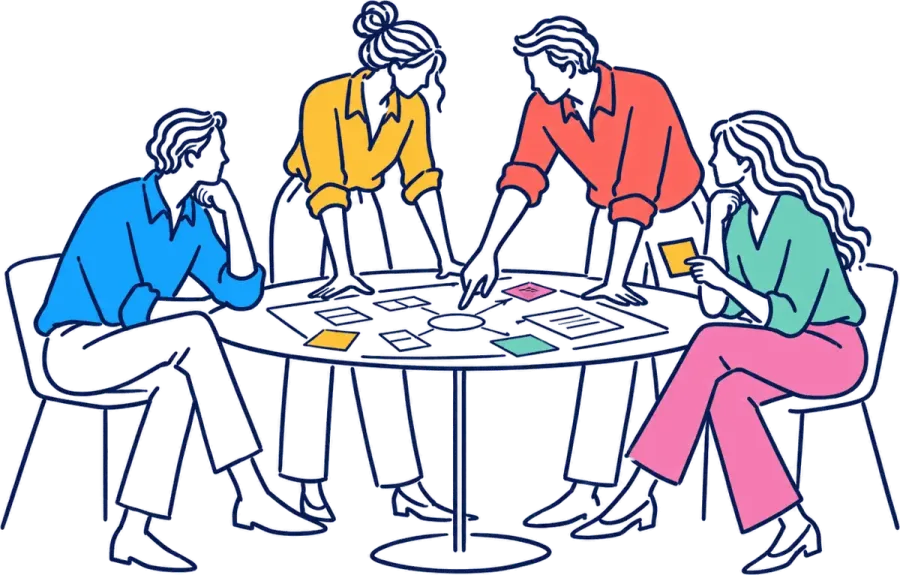
We listen to the whole team, find where the friction really sits, and go back to the basics. Then the team builds its own charter for how it will behave, so leaders can lead and team members hold each other to account. Everyone, including the leader.
WHY TEAMS STRUGGLE
Most teams aren't short of capable people. They're short of the conditions that let capable people do their best work when it gets hard.
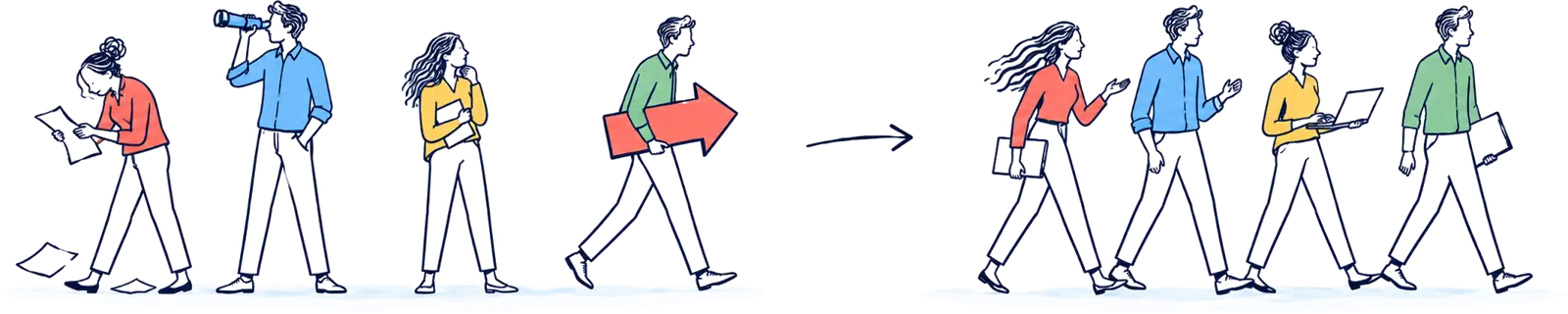
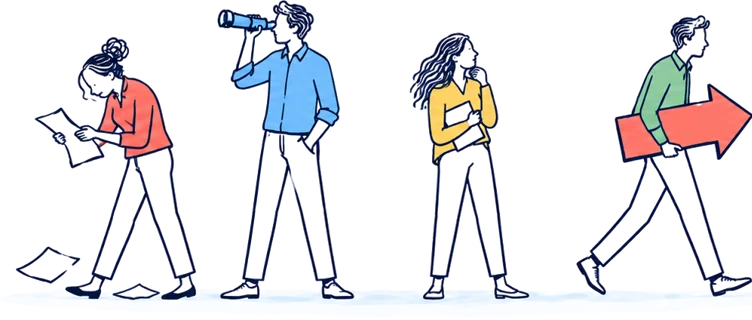
Under pressure, everyone protects something: how they're seen, whether they belong, whether they look competent, the relationships they need. When the conditions around a team are thin, that protection looks like silence, distance, delay and defending.
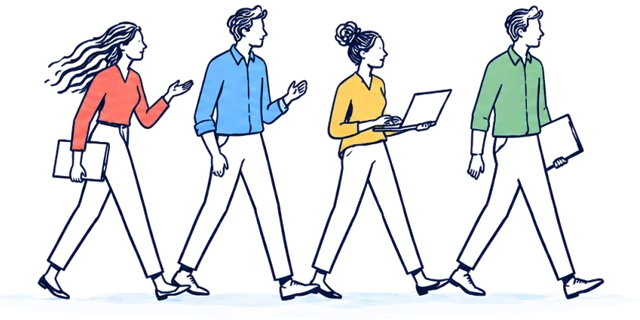
When the conditions are strong, the same people raise problems early, ask before they assume, and change course when the facts change.
Same people. Different conditions. Different behaviour.
TEAMS COME TO US WHEN THEY'RE
- Split into camps after a restructure, and nobody's saying it out loud.
- Polite in the meeting and brutal in the corridor.
- A leadership team that needs to lead together, not just report in.
- Under sustained pressure and starting to fray.
- Getting along beautifully and still not getting anywhere.
- New, merged or freshly formed, and want to start well.
TEAM CONDITIONS ASSESSMENT
What should this team work on first, and why?
What this team needs most right now, in its own words.
Most leaders can sense when something isn’t working. What’s harder is knowing which issue matters most, and whether the team sees it the same way. That’s what the Team Conditions Assessment answers.
Engagement surveys tell you how people feel. This shows what’s shaping how the team works together, and what the team itself says to address first.
What you get
- The team's own priorities. What people say matters most, not whichever score happens to be lowest.
- Agreement and division. The spread of experience, not just the average.
- The team's voice, kept. Every comment read, and de-identified before anyone else sees it.
What it shapes
The leader's coaching, the team session and a short list of things to try. Run it again later to see what has shifted.
A baseline, not a verdict.
QUESTIONS PEOPLE ASK
Is it anonymous?
Individual responses are never shared with your organisation. Results are reported at team level, and no small group is reported on its own.
Is it a psychosocial risk assessment?
No. It’s a development tool. It can support the consultation work you already do.
A report that ends in a handful of things to try.
Chosen for this team.
TEAMING
Form fast. Build trust quickly. Repair what's broken.
This is the work we're best known for. It's for teams that need to come together quickly and strongly, a team that has to perform before it has had time to settle, or one where trust has gone and needs rebuilding.
It's immersive and it's transformative. People often walk in guarded, polite and quietly sceptical. They walk out knowing each other, having said the things that needed saying, with an agreement about how they'll work and a plan to keep it alive.
It can start with a focused session or run as a longer program. We shape it around the team, not a standard package.
- Before the room
Listen first
The Team Conditions Assessment, so every voice is heard, plus a frank conversation with the leader.
- In the room
Say what hasn't been said
We start with the people before the work, go back to the basics, and get to the conversations the team has been stepping around. This is usually where the room changes. Then the team writes its own charter, and everyone commits to one thing.
- After the room
Keep it alive
Check-ins, coaching for the leader, and the team answering again later so everyone can see what has shifted.
EVERY TEAM LEAVES WITH
- A team charter The behaviours the team agreed to, written in its own words, with how it will hold itself to them.
- A profile for every person, and one for the team What each person brings, what helps them do their best work, and what their team values in them. Put together, the profiles show how the team can work with each other on purpose, not by luck.
- One commitment each The one thing each person will do differently, with permission for the team to hold them to it.
- A plan for what happens next So the charter is still alive in three months, not filed in a drawer.
People walk out different from how they walked in.
(And, quite often, with a team nickname or two that nobody will let go of.)
IN THE ROOM
What it's actually like.
Expect to laugh, and expect to be a little uncomfortable. Sessions start with your team's own data, not a generic model, so the conversation is about you from the first hour. There are stories, there's humour, and there's the moment the room stops talking to the facilitator and starts talking to each other. Carly reads the room and adapts as she goes. You'll leave with something specific to do on Monday, and usually with a better sense of the people beside you.
Carly recognised that we are a newly formed team and tailored the workshop for us to get to know each other on a more personal level.
Everything was specifically aligned to our survey and key points to improve on.
A practical toolkit to bring our team closer together and extend our team’s success in a safe, genuine way.
Everyone is held to account. Including the leader.
Behaviour the team agreed to, not rules handed down.
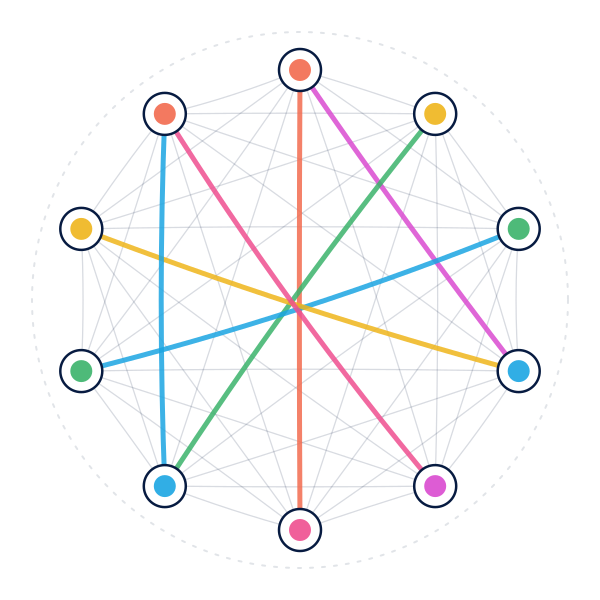
45 RELATIONSHIPS
In a team of ten, there aren't ten people. There are 45 relationships.
And every one of them matters. Most teams invest in the easy ones, the familiar and convenient relationships. That's where the blind spots form, and where silos, assumptions and misunderstandings quietly grow.
Working with humans shouldn't feel like a guessing game. It shouldn't be emotionally expensive, and it shouldn't rely on just getting along.
You don't need to click with everyone naturally. You need ways to work with everyone intentionally.
MORE FOR TEAMS