

HUMANMETRICS / LEADERSHIP
Every leader is working it out as they go. Some just have better notes.
Leadership asks a lot of a person. You're meant to be confident but open, decisive but consultative, across the detail but not in it. Nobody hands you the manual, partly because there isn't one.
HOW WE WORK WITH LEADERS
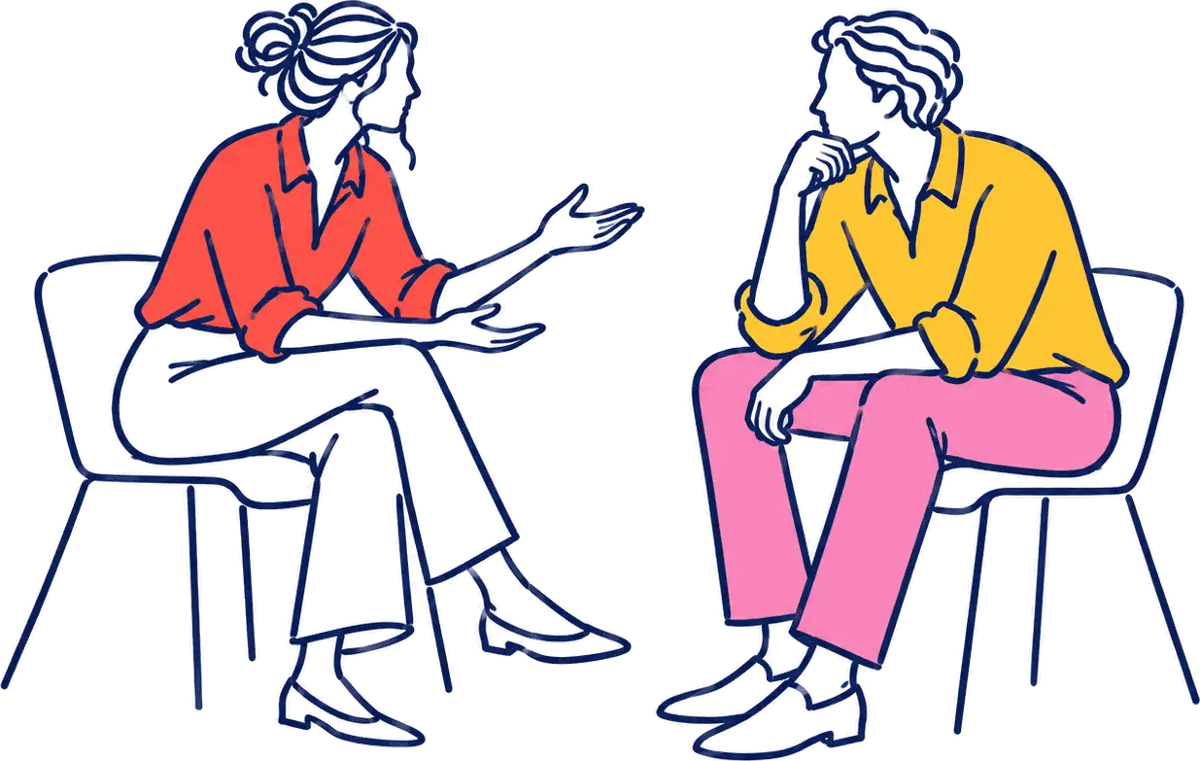
We help leaders understand themselves and the people around them, build confidence and judgement, and grow into bigger responsibilities without losing what made them good in the first place.
WHAT LEADERS TELL US
- I've just been promoted and I'm not sure I'm ready.
- I was the expert. Now I'm the manager, and I miss having the answer.
- Half my team used to be my peers. It's awkward.
- I need to influence people I have no authority over.
- I've been told I need more executive presence. I have no idea what that means.
- I need to give some hard feedback, and I keep putting it off.
HOW LEADERS ACTUALLY CHANGE
Knowing isn’t doing.
From self-awareness to everyday leadership.
Most leadership development stops at self-awareness. You do the profile, nod at the report, then go back and do exactly what you did before. Change takes two more steps, and it rarely happens alone.
We work on what happens after the report: noticing your patterns as they happen, and practising a different response until it sticks. The people around you notice first. They say the hard thing earlier, and mistakes turn into learning, not blame.
SPECIALIST LEADERS
Brilliant at the what. Ready for the how.
You were promoted for being brilliant at the work. Engineer, clinician, analyst, lawyer, finance lead: for years you were recognised and rewarded for what you could do. Somewhere along the way, it became part of who you are.
Then someone handed you the baton.
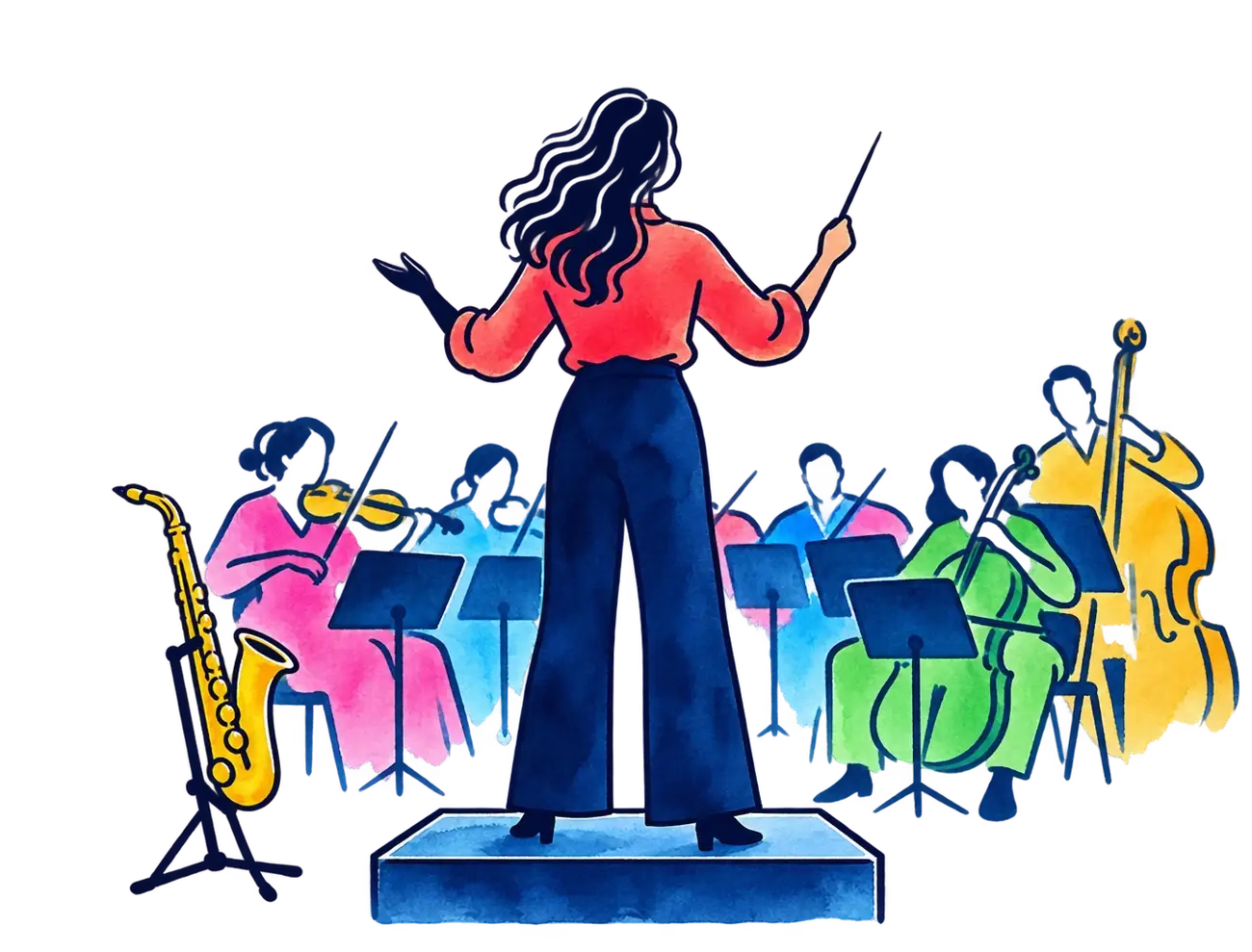
Picture the best saxophonist in the orchestra being made conductor. On her first night, the sax section comes in a beat late. She can hear exactly what’s wrong, and every instinct says: put the baton down and just play it. It would sound right. But while she’s playing, nobody is conducting. The orchestra drifts, and the player who came in late learns that someone will always cover the part.
That’s the shift for specialist leaders. You can still play. You just can’t play while you’re conducting. Leading means letting people struggle, sometimes fail, and learn. It means measuring your success by how well everyone else plays.
And one day, the player who came in late is the one standing at the front with the baton, doing the same for someone else. That’s how leaders create leaders.
In leadership, people are most of the job. And people are tricky, complicated, layered, messy and wonderful. It’s a whole new language, and it can be learned.
- Playing the partConducting the orchestra
- Being the expert in the roomMaking room for other expertise
- Fixing it yourselfLetting them learn it
- Your soloTheir performance
You can’t play the saxophone while you’re conducting the orchestra.
For technical and functional specialists, new to leadership or long in it. It starts with what your own team says, through the Team Conditions Assessment.
WORKSHOPS
Any length, any level, built around your people.
From a ninety-minute session to a program that runs across months, in person or online, for a single team or a whole leadership group. These are the workshops we're best known for. Every one is shaped around your people and the work in front of them.
Ready Now
For high-potential leaders. Closing the gap between being seen as having potential and being trusted with the bigger role.
From Expert to Leader
For technical leaders. Moving from being the one with the answer to building a team that finds it.
Leading Psychological Safety
What leaders do, day to day, that makes it safe to speak up, ask for help, admit a mistake and disagree.
Leading High-Performing Teams
Turning a group of capable people into a team that decides well, adapts fast and holds the standard.
Adaptive Leadership
Leading when there's no clear answer: holding steady, making sense of change and taking people with you.
Better Friction
Shared language for disagreement, and a few simple sentences that interrupt an unhelpful pattern before it sets.
TEAM-INFORMED LEADERSHIP
Leadership development built on what your team actually says.
Our most distinctive approach starts with each leader's own team. Before the workshop, the team describes what it's like to work together, confidentially. Leaders then work from that evidence instead of a case study about a fictional widget company, practise between sessions, and see what has shifted when the team answers again.
The evidence comes from the Team Conditions Assessment. It works inside any of our workshops, at any length.

WHAT LEADERS SAY
Invaluable for leaders who are beginning their leadership journey, or leaders who have been around the block a few times and potentially gotten out of touch with what it means to be a leader.
Real eye opener on the effect of leadership on the team.
The data showed members of the leadership team are experiencing things differently, and not in a good way.
Inspirational and quite life changing.
ONE TO ONE
Executive coaching
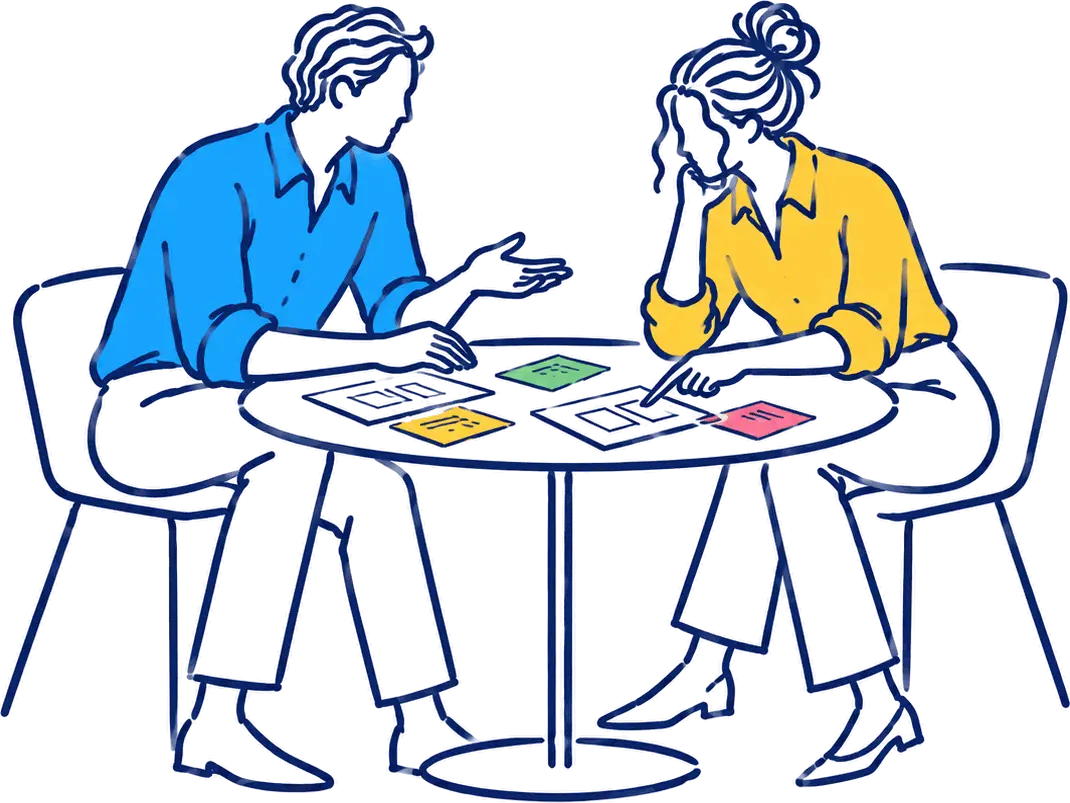
A confidential place to think, with someone who will tell you the truth and help you do something with it. We work on what the role actually asks of you: confidence, influence, relationships, decisions, and how you come across under pressure.
Coaching is agreed three ways. You, your manager and your coach settle what it's for at the start, so the conversations stay private and the goals stay connected to the job.
COACHING OBJECTIVES
What people usually work on.
A few examples. Every coaching relationship sets its own.
Confidence and presence, influence without authority, candid feedback, stepping into a bigger role, and leading through change.
Culture isn't what leaders say. It's what they allow, reward and walk past.
SELF-AWARENESS AND STRENGTHS
Notice sooner. Choose better.
We speed up, take over, go quiet or start rewriting everyone else's work. Most of it is protective, and none of it makes you a bad leader. The point is to notice sooner, and to know which of your strengths you're overusing.
Pressure makes our familiar patterns louder, and changing your mind is a performance behaviour, not a weakness. We draw on established Hogan and DISC tools alongside team feedback and structured reflection, and a psychologist interprets every result with you.

PSYCHOMETRIC ASSESSMENT
Evidence first, not guesswork.
Alongside our own team feedback, we use established psychometric tools from Hogan and DISC, interpreted by a registered psychologist accredited in both. They're used for individual leaders, whole teams and important appointments, and every profile comes with a proper debrief, not just a report in an inbox.
Hogan leadership assessment
How a leader tends to operate day to day, what derails them under pressure, and what drives them. Used for development, coaching and senior appointments.
Hogan team diagnostics
How the mix of personalities in a team shapes the way it works: where it's strong, where it has blind spots, and what that means for how it should operate.
DISC Advanced profiling
A practical, accessible picture of how people prefer to communicate and work, for individuals and whole teams. A quick way to give people shared language for their differences.